What CUB is pushing for in Xcel's electric rate case

Last year, Xcel filed a request to increase electric rates for Minnesota customers. If the request is approved as is, the typical customer's bill will go up by $10.27 per month, or $123.37 per year.
Xcel's Electric Rate Increase
Xcel’s request to increase rates will impact a typical residential customer to the tune of an extra $120/year, while many are already struggling to pay their current bills. As we’ve written about, past due balances are up and shutoffs are at a record high. Meanwhile, factors outside Minnesota’s control—including inflation, federal policy change, and continuing uncertainty—are adding to affordability challenges.
Here in Minnesota, CUB is working hard to keep energy costs as low as possible. Xcel’s rate case also provides an opportunity to reassess how both the company’s corporate policies and its shutoff policies can ensure ratepayers have access to affordable, reliable, and equitable service. Keep reading and learn more about CUB’s main asks within the rate case.
Keep rates as low as possible.
Some level of a rate increase may be needed, but rates should still be kept as low as possible.
Reduce Return on Equity
As Xcel’s shutoff rates skyrocket, the company proposes increasing shareholders’ return by an eye-popping amount. The increased return alone would cost ratepayers an additional $100 million annually. Xcel’s return should be lowered, not raised. CUB’s proposal saves customers $24 million annually.
Eliminate reconnection fees
These fees keep struggling households from maintaining reliable service. Reconnection fees can be eliminated, and it will cost customers less than 50 cents a year.
Eliminate late fees
Late fees can amount to thousands of dollars of debt for some Xcel customers – and there’s no evidence they prompt timely payments. Late fees should be eliminated.
Keep rates as low as possible by focusing on reliability and safety.
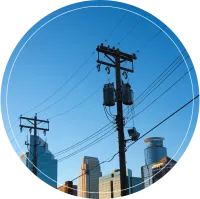
Any electric bill increases will be difficult for many Xcel customers. Xcel needs PUC approval before raising rates, and the company’s request and reasoning must be thoroughly reviewed to ensure a rate increase is justified and reasonable.
Some level of rate increase is likely to be approved. The cost of maintaining or replacing Xcel’s existing infrastructure generally warrant some additional level of investment that increases rates.
Xcel’s oldest natural gas plant was commissioned over 50 years ago. Xcel owns Minnesota’s two nuclear power plants – both of which opened in the early 1970s. Xcel’s coal plants, built in the 1960s, ‘70s, and ‘80s, are being replaced. The lines that deliver electricity to our homes and buildings also need to be maintained or upgraded. Xcel owns and operates around 500,000 utility poles in Minnesota, with an average age of 54 years. Everyone’s experienced a power outage, and investments in our distribution and transmission system can make it more resilient and power outages less common.
After years of little change, the demand for electricity is expected to increase dramatically over the next few years. Data centers, new manufacturing, and home and vehicle electrification are all key drivers. Xcel will need to make investments to both meet this increased demand.
Fortunately, we know it’s quicker, safer, and cheaper to take advantage of renewable energy sources like solar and wind, which Minnesota has in abundance. If Xcel were continuing to make investments in fossil fuel generation like natural gas and coal, we might be looking at an even larger rate increase request. Nevertheless, expanding Minnesota’s capacity to generate and deliver electricity comes at a cost, paid for by ratepayers.
Other reasons Xcel has provided for its increase include inflation, workforce development, and improving customer service quality.
CUB’s role as a consumer advocate is to monitor Xcel’s investments and ensure they are cost-effective and benefit ratepayers. We’re active in dozens of regulatory proceedings focused on a variety of utility issues – including infrastructure projects, innovative rate design, customer service quality, consumer protections, and more – but rate cases are typically the most visible and impactful dockets before regulators.
In short: Any justifications for Xcel’s electric rate increase should focus on providing affordable, reliable, clean, and safe service for Xcel customers.
Lower Xcel’s return on equity – shareholder profits.

Xcel is an investor-owned company, with shareholders who expect to earn a return on their investment. It’s the PUC’s task to balance shareholders’ interests with Xcel customers’ interest.
In Minnesota, and many other states, utilities are granted a monopoly service territory by state law. Minnesotans don’t have a choice in their energy provider. Investor-owned utilities in Minnesota are required by law to provide reliable and regulated service. In exchange, the utility is allowed to earn a fair return for shareholders.
The key word here is fair. Xcel wants to increase its return on equity (ROE) from 9.25% to 10.3%--at an additional cost to customers of $100 million annually. This additional return for shareholders represents a quarter of Xcel’s total rate increase request. And it comes while at the company’s profits are already up.
A reasonable return balances shareholder and ratepayer interests, doesn’t allow for excessive profits, and takes into account the public interest. We don’t think an ROE increase is at all justified. In fact, CUB’s expert witness analysis shows that Xcel’s ROE should come down. In this case, we recommend reducing Xcel’s ROE to 9.0%--an incremental step toward a more reasonable ROE. This would save ratepayers $124 million each year compared to Xcel’s request.
Eliminate reconnection fees.
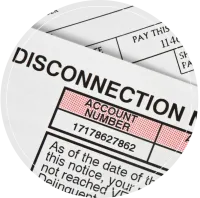
Xcel shut off 52,000 customers in 2024 and has already shutoff even more so far in 2025. Losing access to electricity has countless downstream impacts – food and medicine goes bad, internet goes down, heating and cooling are unavailable, and more. CUB has worked with Xcel to improve its disconnection practices, but more must be done. Eliminating reconnection fees will keep customers from falling into a deeper financial hole.
When electricity is disconnected for nonpayment, customers must pay a fee to get reconnected. Customers who can be reconnected remotely pay $13.50. Customers without smart meters pay $50 for in-person reconnection, and this fee will increase to $95 starting in 2026.
Reconnection fees make it harder for customers to regain access to electricity. Xcel customers can’t be disconnected until their past-due balance exceeds $300, so it’s safe to assume these customers are already struggling with their household costs. Other states have ended reconnection fees, finding that they are punitive and “make it less likely customer who have already failed to timely pay will be able to do so at all.”
According to Xcel’s calculations, eliminating fees to reconnect service to shut-off customers would cost ratepayers about 3 cents per month—a negligible cost to provide a significant benefit to energy-burdened households.
Eliminate late fees.

Similarly, late fees make it harder for Xcel customers to catch up with past due bills. Xcel charges 1.5% monthly on unpaid balances of $10 or more. This adds up to 18% annually –which is similar to historic credit card interest rates. Xcel states that “late payment fees are, in essence, interest charges” on the company’s own debt. However, Xcel’s annual interest rate is lower than the late fees it charges, at 5.34% per year, or 0.45% per month. Xcel charges residential customer late fees three times higher than the actual interest they are paying on their own debt.
Further, Xcel believes that late fees incentivize customers to make on-time payments, but there’s no evidence to support this claim. In fact, Kentucky regulators eliminated late fees during the COVID-19 pandemic, finding they have “little discernible effect on the timeliness of residential customer payments.”
Massachusetts and New Jersey already prohibit utilities collecting late fees. New York is considering it. And many states require that low-income customers be exempt from late fee charges.
Imposing late fees doesn’t change a customer’s financial circumstance. It just makes it more difficult to keep up.
Submit a Comment
If you support CUB’s goals within Xcel’s electric rate case, you can make your voice heard by submitting a comment to the PUC. Click the button below for a quick and easy comment form. Or you can send an email to consumer.puc@state.mn.us and be sure to reference Docket 24-320. Your comment— including your name, email address, and any other information you share—will become a part of the public record. Here are some tips to make your comment as effective as possible.